A Livery That Outlasted the Airline
Pan Am disappeared from the skies in 1991, but the logo never quite left the cultural imagination. The airline had been a fixture since 1927 - pioneering routes across Latin America and the Pacific, operating the Boeing 314 Clipper flying boats capable of water landings, and later helping bring the Boeing 747 to commercial service in a way that reshaped long-haul international travel. Its collapse, alongside Eastern Air Lines that same year, still marks the largest failure of a major U.S. carrier until Spirit Airlines folded recently.
What Pan Am left behind wasn’t just debt and dormant routes - Delta Air Lines and United Airlines absorbed many of those - but a specific idea about what flying could feel like. Attentive cabin crews, fine dining at altitude, a sense that the journey was its own destination. That idea is now the commercial proposition of Pan Am Journeys, a series of ultraluxury private-jet expeditions operating under the Pan Am name after a travel company acquired the brand with the stated goal of reviving it, minus the actual scheduled airline.
Africa in 2027, Aboard a Boeing 757-200
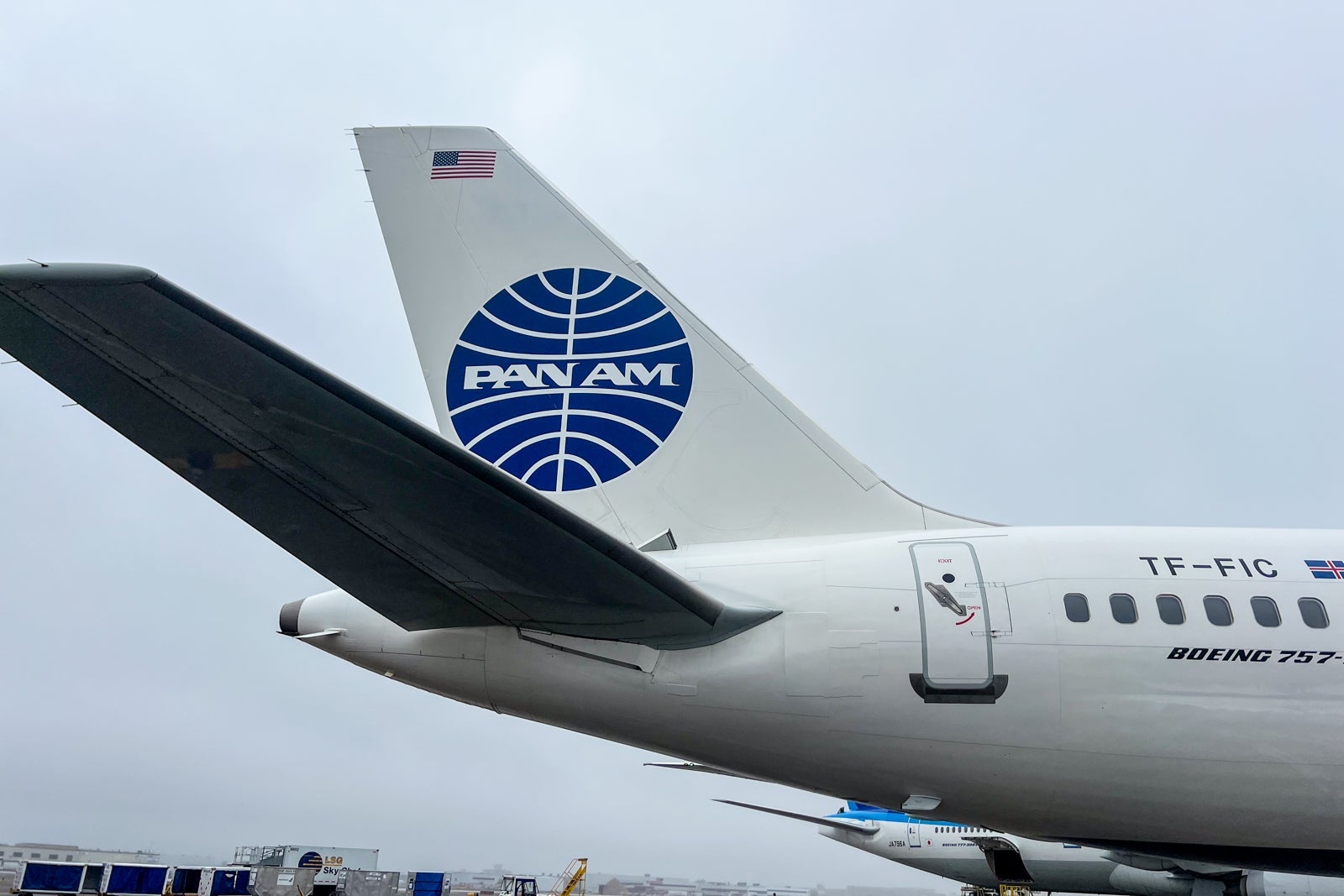
The next chapter in that revival is a trip called “A Journey to Reimagine Africa,” scheduled for 2027. Tickets went on sale this week. The expedition runs aboard Pan Am’s private Boeing 757-200, dressed in the airline’s historic livery and fitted with lie-flat business-class seating throughout. The ground program is operated in partnership with SafariScapes and includes stays at high-end hotels alongside a curated safari itinerary.
This isn’t the brand’s first outing. Last summer, the retro-liveried jet made its public debut, and this month the aircraft is mid-flight on what the company calls its true maiden voyage - a transatlantic crossing. The Africa trip, set for 2027, represents the first major destination-focused itinerary to go on public sale, and it’s specifically designed to trace the kind of routes Pan Am once made famous.
The itinerary aims at something more than nostalgia tourism. Africa was part of Pan Am’s operational history, and the 2027 expedition frames itself as a continuation of that geographic legacy rather than a theme-park recreation of it. Whether that framing holds up against the reality of a $129,000 price tag is a fair question, but the logistics at least appear serious: a private jet with genuine lie-flat seats, hand-picked safari camps, and a ground operator with established Africa credentials.
All-inclusive fares start at $129,000 per person, based on double occupancy. Bookings can be made through a travel adviser, directly via journeys@panam.com, or through Pan Am’s website.
What Africa Actually Offers the Traveler
Strip away the branded aircraft and the nostalgia, and the destination itself carries the weight. Sub-Saharan Africa remains one of the most logistically complex regions to navigate independently, which partly explains why high-end safari operators command what they do. Light aircraft transfers between camps, private conservancies with restricted access, and the sheer geography involved - distances that make a private Boeing 757 less indulgence than practical solution - all add up.
A well-run safari itinerary in East or Southern Africa typically moves through multiple ecosystems: the open grasslands of the Serengeti or Maasai Mara, the floodplains of Botswana’s Okavango Delta, the dramatic escarpments of the Drakensberg. Each requires separate logistics and different timing relative to wildlife movement and rainfall. The Pan Am Journeys Africa trip hasn’t published a full day-by-day itinerary publicly, but the SafariScapes partnership and the all-inclusive structure suggest a circuit approach rather than a single fixed-camp stay.
Timing matters enormously on the continent. The great wildebeest migration through Tanzania and Kenya peaks roughly between July and October. Botswana’s Okavango swells with the Okavango River flood between June and August, creating a water-world environment that disappears by October. Southern Africa’s dry season, which runs May through September across much of the region, produces the best game-viewing conditions as animals concentrate around shrinking water sources. A 2027 departure date is broad enough to suggest the itinerary could be designed around any of these windows, though the company hasn’t confirmed the travel months yet.
The Aircraft as Destination
Pan Am Journeys is, at its core, selling two things simultaneously: a place and a plane.
That’s an unusual proposition in travel, where the aircraft is almost universally treated as the least interesting part of the experience - a necessary inconvenience between origin and destination. The Pan Am model inverts that. CEO Craig Carter has described the project’s origin as a gathering of former crew members, aviation enthusiasts, and travelers who shared a conviction that “elegance, discovery and the journey itself still matter.” The Boeing 757-200 in Pan Am livery is, in that framing, as much a part of the product as the safari camps.
The 757-200 is a narrow-body aircraft, which means a two-aisle wide-body configuration isn’t on offer - but the lie-flat seats convert the cabin into something closer to a private charter experience than a commercial flight. For a long-haul destination like Africa, where the positioning flights alone can consume the better part of two days in standard commercial travel, arriving rested has real value.
Aviation historians will note that the 757 wasn’t part of Pan Am’s original fleet - the airline operated it briefly before going under - but the aircraft fits the era of the brand’s final years, and cosmetically it wears the livery convincingly. For the intended audience, that’s probably enough.
Who Actually Books This
The $129,000 per-person price point is not a typo, and it doesn’t need softening.
For context, a top-tier private safari through Botswana and Tanzania, using chartered light aircraft between camps, staying at properties like Mombo or Singita Grumeti, can approach $30,000–$50,000 per person for ten days, before international positioning flights. Add a private transatlantic jet, premium accommodation throughout, and a branded experience built around a culturally resonant aviation name, and the arithmetic - while still extraordinary - becomes at least explicable.
The market for this kind of travel is small but demonstrably real. Ultraluxury operators like Abercrombie & Kent, &Beyond, and Remote Land consistently report demand for private-jet world tours at comparable price points. Pan Am Journeys is entering a competitive space, not creating one from nothing. What it brings that the others don’t is a specific emotional currency - the Pan Am name still carries weight for a generation that flew in the airline’s final decades, and for a younger cohort that romanticizes the era without having experienced it.
The Africa expedition’s partnership with SafariScapes adds operational credibility. The real question for anyone considering the booking is how the itinerary holds together day to day - which camps, which conservancies, which departure window in 2027.
That information isn’t fully public yet.