The Problem Nobody Warns You About
Remote work sounds like freedom until you’re hunched over a wobbly café table at 2pm, your laptop screen washed out by sunlight, arguing mentally with an Airbnb listing that described its connection as “super fast” and couldn’t load a basic email. That is the actual texture of working from the road for most people, and it grinds you down faster than any long-haul flight. The romantic version — laptop open on a terrace, glass of wine, golden hour — exists for about forty minutes before a video call drops and the fantasy collapses.
The post-pandemic years produced a real solution to this, not a marketing concept but an actual category of accommodation: coliving spaces that fold a proper coworking setup into a social residential property. They borrow the community energy of a hostel and the comfort of a boutique hotel, and strip out the dorm beds and the bare fluorescent common rooms.
Outsite is the largest platform in this space.
What Outsite Actually Is
Founded in 2015 with a single house in Santa Cruz, California — the original pitch was surf and work — Outsite has grown into a global network of over 50 locations with more than 5,000 members. You don’t need a membership to book a stay; anyone can reserve a room through their website. But membership unlocks a meaningful set of advantages: a yearly plan runs $199, and a lifetime membership is $499. Those fees buy access to members-only locations, one free week in new destinations, 50% off flash sales, 40% off extended stays, early access to new openings, a jobs and sublets board, and invitations to new member mixers.
Browsing is simple. You filter by destination or by the type of environment you want — beach, city, or mountain — and book a private room. Every booking is a private bedroom. Most come with an en-suite bathroom; some of the more affordable rooms share a bathroom with one other guest. The shared spaces are where Outsite earns its keep: communal kitchens are fully equipped and genuinely large, living rooms are properly furnished, and many locations have outdoor patios, roof decks, or pools depending on where you are.
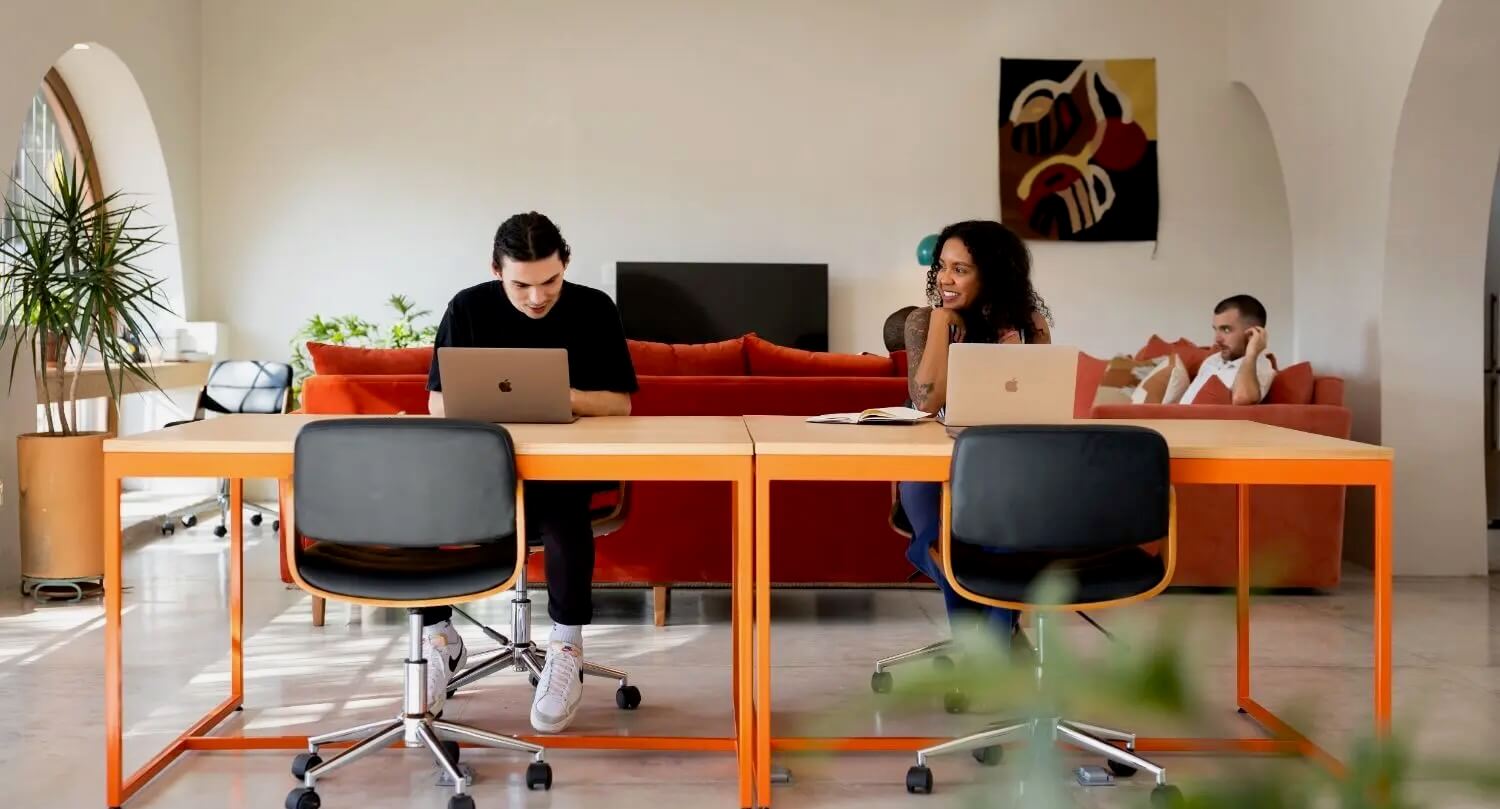
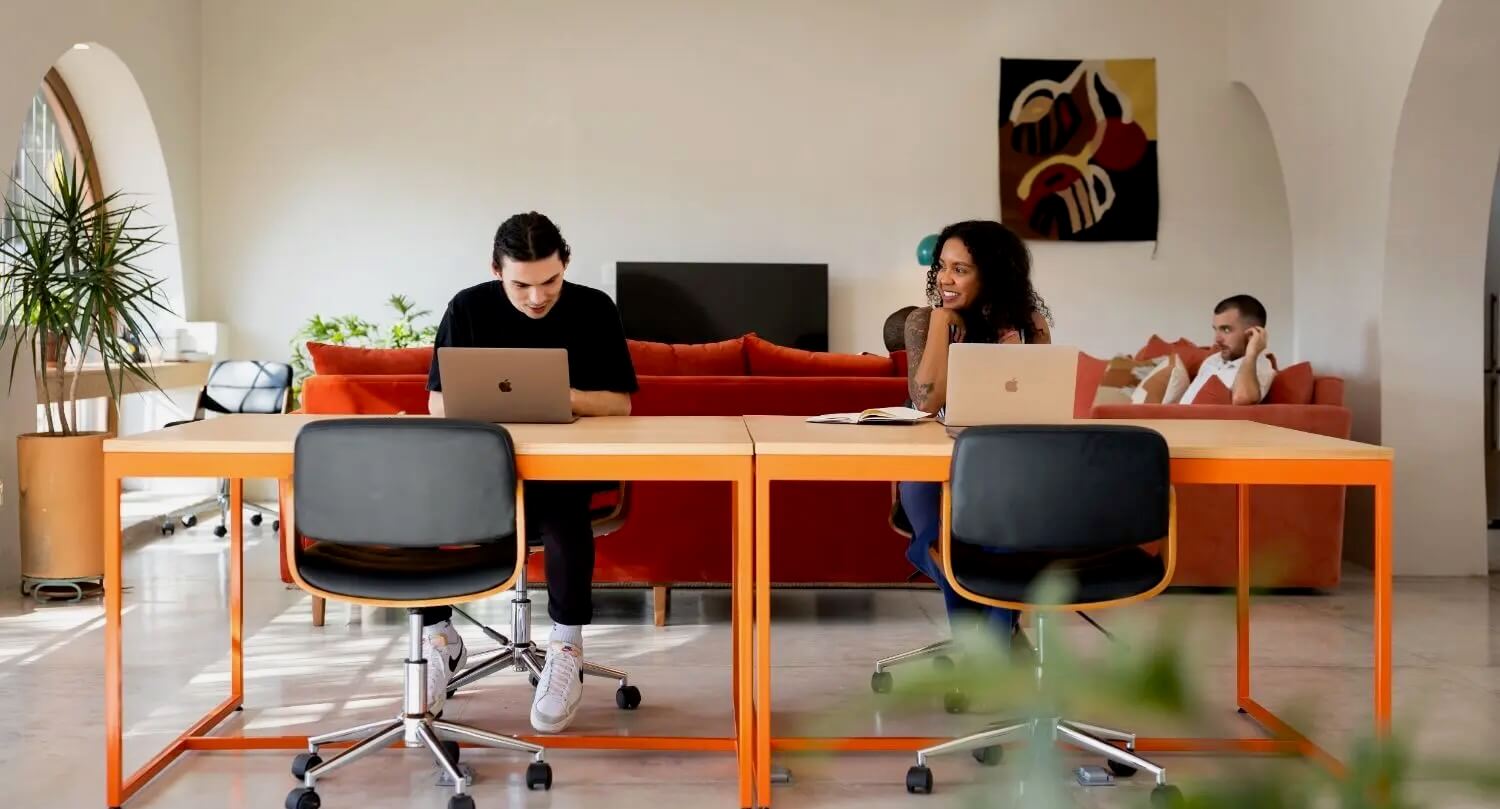
The coworking infrastructure is built into every single property. Ergonomic chairs, dedicated monitors you can plug into, plenty of power outlets, and enterprise-grade Wi-Fi that handles video calls without drama. The pitch is that you can wake up, make coffee in a real kitchen, and be at a proper desk — focused, comfortable, not bothered by café noise — within five minutes of rolling out of bed.
The Bordeaux Location, Specifically
I stayed at Outsite’s Bordeaux property, and the gap between expectation and reality closed in the right direction. The space had modern furniture throughout, a small gym on-site, laundry facilities, and a coworking area that felt like a place where actual work happened rather than a table shoved into a corner as an afterthought. My private room had a dedicated desk, a comfortable bed, and a bathroom with genuinely good shower pressure — a detail that sounds minor until you’ve spent three weeks in places where the water dribbles.
What made the stay function socially was the Community Manager, a role every Outsite location staffs. Before arrival, guests are added to a local WhatsApp group. During the Bordeaux stay, the Community Manager was available to suggest restaurants, answer logistics questions, and generally act as the connective tissue between people who’d arrived as strangers. Weekly programming at Outsite locations typically includes family-style dinners, Friday tapas crawls, morning yoga sessions, and group weekend trips — the frequency and format varying by location.
That social layer matters more than it might seem on paper. Remote work is solitary by design. You can spend a productive week somewhere beautiful and speak to almost no one outside of Slack and video calls. Outsite structures around that reality rather than ignoring it.
Membership Math and Who This Is For
The $199 annual membership makes financial sense quickly if you stay more than once or twice in a calendar year. The 40% discount on extended stays — anything beyond a standard short booking — is where the real savings accumulate for people who tend to base themselves somewhere for three or four weeks at a time rather than passing through. The lifetime membership at $499 is straightforward math for anyone who expects to use the network regularly over several years.
Outsite is not trying to compete with budget travel. Private rooms, real kitchens, coworking setups, and staffed properties position it above hostel pricing and often above mid-range Airbnb rates in desirable cities. The value proposition is not cheapness but the elimination of friction: you don’t arrive and spend two days figuring out where to work, how to meet people, or whether the internet will hold. Those problems are solved before you unpack.
It suits a specific kind of traveler — someone who is genuinely working, not just checking email occasionally, and who wants to be somewhere comfortable and social without the effort of assembling that from scratch in each new city.
A Few Practical Details
The 50-location network spans multiple continents, with properties concentrated in Europe, North America, and Latin America. The website’s filtering system is functional and honest about the vibe each property carries — a beach property in Portugal and a city apartment in Lisbon are categorized differently, which helps narrow the choice before you get deep into the booking flow.
Guest-only access means you don’t need to commit to membership to test the experience. Booking a single stay without a membership is the low-risk entry point, and if the model works for how you travel, the annual fee pays for itself within a handful of bookings.
Community events are organized, not imposed. Nobody is forcing communal dinners on guests who want to keep to themselves, but the programming exists and the WhatsApp group runs continuously, which means opting in is easy whenever you want company.
The Bordeaux location stacked up well against comparable Airbnb options in the city once you priced in a dedicated coworking space, reliable internet, and the social infrastructure — all of which would cost extra, or require significant effort, when sourced independently.