The Road That Changes You
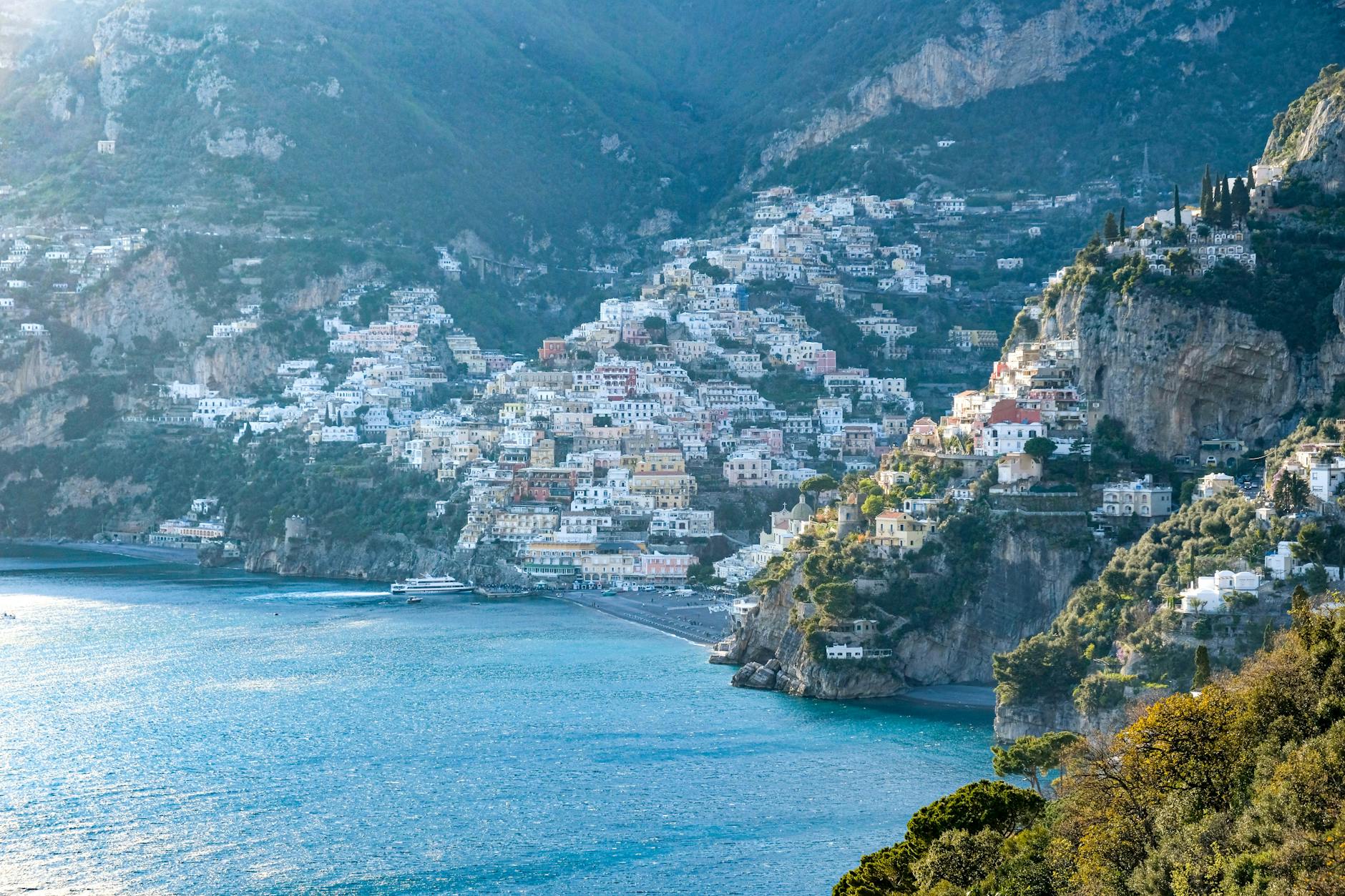
There’s a moment somewhere between Positano and Praiano, when you round a blind hairpin bend and the Tyrrhenian Sea suddenly fills your entire windshield - deep, improbable blue stretching to the horizon while terraced lemon groves tumble down the cliff face beside you. That moment is why people drive the SS163, the Nastro d’Argento (Silver Ribbon), one of the most jaw-dropping and genuinely terrifying roads in Europe.
The Amalfi Coast stretches roughly 50 kilometres along the southern edge of the Sorrentine Peninsula in Campania, connecting the towns of Vietri sul Mare in the east to Positano in the west. It’s a UNESCO World Heritage Site, an engineering marvel carved into near-vertical limestone cliffs, and - depending on when you visit - either a sublime escape or a bumper-to-bumper nightmare. This guide will help you make it the former.
When to Go
The honest answer: late April through early June, or September through mid-October. These shoulder seasons offer warm temperatures (roughly 18–24°C), manageable crowds, and hotels that haven’t tripled their prices for the summer crush.
July and August are beautiful and brutal. Traffic on the SS163 can grind to a standstill for hours, parking is essentially nonexistent without pre-booking, and a modest room in Positano that costs roughly €150 in May will run you €350 or more. If summer is your only option, visit mid-week, move early (on the road by 7:30am), and book everything months in advance.
March and early April can be magical - fewer visitors, dramatic light, occasional rain that keeps things green - but some restaurants and smaller hotels operate on reduced hours or close entirely.
The Towns Worth Knowing
Positano
The postcard town. Pink and terracotta houses stacked impossibly up the cliff, bougainvillea spilling everywhere, a pebbly beach that gets packed but remains genuinely beautiful. Positano is expensive and unapologetically so - expect to pay roughly €25–35 for a decent pasta lunch with a view. It rewards those who stay at least two nights; the day-tripper crowds thin dramatically in the evenings and early mornings, when the town genuinely earns its reputation. Base yourself here if aesthetics are your priority and your budget can handle it.
Praiano
Fifteen minutes east of Positano and criminally underrated. Praiano sits higher on the cliff, spreads across two small bays, and functions more as a real village than a resort set. The sunsets from the church of San Gennaro are extraordinary. Hotels here run roughly 30–40% cheaper than Positano equivalents, and you can walk down to the small beach at Marina di Praia. For drivers, this is a genuinely smart base.
Amalfi Town
The historical heart of the coast and the town that gives the whole stretch its name. Amalfi was once a powerful maritime republic rivalling Venice and Genoa - its Duomo di Sant’Andrea, consecrated in the 9th century and rebuilt in striped Arab-Norman style, sits at the top of a broad staircase in the main piazza and is legitimately worth half an hour of your time. The town is the most logistically convenient stop: ferries connect to Positano, Salerno, and the island of Capri, and there are several accessible car parks (roughly €3–5 per hour). The backstreets off the main drag sell good local ceramics without the extreme markup of Positano’s boutiques.
Ravello
Sit this one out if you’re purely road-tripping, but seriously reconsider that decision. Ravello sits 350 metres above sea level, accessed by a narrow road that branches north from Amalfi. It’s dramatically quieter, cooler, and more genuinely Italian than the coastal towns. Villa Rufolo and Villa Cimbrone have gardens with views that justify every superlative ever applied to this coastline. Ravello hosts a world-class classical music festival from June through October, and a meal at a trattoria up here - where you’re eating with locals rather than tourists - will cost you roughly €18–25 for a full lunch with wine.
Cetara
Near the eastern end of the coast, past Vietri sul Mare, Cetara is a small fishing village that produces colatura di alici - a fermented anchovy sauce that’s been made here since the Middle Ages and is considered among the finest condiments in Italian cooking. A small bottle makes an excellent gift. The village is largely tourist-free and the seafood at the harbourfront restaurants is exceptional and fairly priced.
Top Experiences
The Drive Itself
Drive west to east (Positano toward Salerno) if you can manage it logistically - you’ll be on the uphill, cliff-facing lane with the views directly to your left, meaning passengers can look down at the sea without craning past you. The full drive takes roughly 90 minutes without stops, but build in a full day. Stop at every belvedere (lookout point) you can find, particularly the one above Furore Fjord, where a narrow gorge cuts dramatically to the sea.
Boat Trips and Sea Caves
Renting a small motorboat from Amalfi or Positano for half a day - roughly €150–200 for a four-person boat without a skipper if you’re licensed - lets you access sea caves, isolated coves, and perspectives of the cliffs that no road can offer. The Grotta dello Smeraldo near Conca dei Marini has luminous green water caused by an underwater window; entry costs roughly €5 by the steps or €3 by boat from Amalfi.
The Path of the Gods
The Sentiero degli Dei is a hiking trail running high above the coast between Bomerano (above Amalfi) and Nocelle (above Positano). It’s roughly 7.8 kilometres, takes 3–4 hours, and offers the kind of views that make every Instagram photo of this coastline look like an understatement. Take the SITA bus up to Bomerano and walk downhill to Nocelle, then descend the steps to Positano. Wear proper footwear - the trail is rocky in sections.
Limoncello and Sfusato Lemons
The sfusato amalfitano is a specific lemon variety grown on the coast’s terraced groves - fatter and more aromatic than standard lemons, with a thick, intensely flavoured rind. Limoncello made from it is in a different category from the stuff you find in duty-free shops. Buy directly from small producers in Maiori or Minori (two low-key towns east of Amalfi that deserve a wander), or from the roadside stalls you’ll pass constantly. Expect to pay roughly €8–12 for a half-litre bottle from a good local producer.
Getting There
The closest major airport is Naples (NAP), roughly 60–75 kilometres from Positano depending on your route. A hire car collected in Naples and dropped in Salerno (or vice versa) is the cleanest option for a road trip. Driving from Naples takes roughly 1.5–2 hours to Positano via Sorrento and the SP145, which connects to the SS163.
Alternatively, you can reach Sorrento by Circumvesuviana train from Naples (roughly €4, 75 minutes) and pick up a hire car there - several agencies operate in Sorrento. Ferries also run seasonally between Naples, Sorrento, and the Amalfi Coast towns, which is a genuinely lovely way to arrive if you’re heading for Amalfi or Positano directly.
Getting Around
The SS163 is narrow, crowded, and not designed for modern traffic volumes. A few practical realities:
- Hire the smallest car available. A compact or subcompact will save you enormous stress. Avoid SUVs entirely unless you enjoy scraping mirrors on passing buses.
- Buses are underrated. SITA buses run the entire coastal road regularly and cost roughly €1.50–2.50 per journey. They’re operated by people who drive this road every day and know every millimetre of it. For day trips between towns, they’re often faster than driving when traffic is heavy.
- Ferries as transport. Between April and October, regular ferries connect Positano, Amalfi, Minori, Maiori, and Salerno. Using the ferry to move between towns and the bus or car for inland exploration is a genuinely sensible strategy.
- Parking. Budget for paid car parks wherever you stop. Street parking is almost entirely prohibited during high season. In Positano, the main car park near the church costs roughly €5–6 per hour.
Where to Stay
Accommodation on the Amalfi Coast broadly splits into three tiers. The clifftop luxury hotels - Le Sirenuse in Positano, Villa Cimbrone in Ravello - are genuinely among the finest in Europe and cost from roughly €600–1,200 per night in high season. They are not for this conversation.
In the mid-range, look at smaller family-run hotels and B&Bs in Praiano, Furore, or Minori. A comfortable double room with a sea view in these towns runs roughly €120–200 in shoulder season. Praiano’s Hotel Margherita and the various agriturismos in the hills above Ravello offer exceptional value.
If you’re watching the budget carefully, Salerno is an excellent and largely overlooked base. It’s a proper southern Italian city with great restaurants, a handsome medieval centre, and direct ferry connections to the coast. A good hotel room costs roughly €80–120 per night, and you’re 25 minutes by ferry from Amalfi.
A Few Honest Warnings
This coast inspires deep affection and occasional mild trauma in equal measure. The roads are genuinely difficult to drive - touring coaches routinely require oncoming traffic to reverse to let them pass. Mobile signal is unreliable in tunnels and around headlands, so download offline maps before you go. And don’t underestimate how much walking is involved in even a relaxed day here: most towns involve significant staircase climbs, and ‘a short walk to the beach’ often means several hundred steps down (and back up again).
None of this should put you off. The Amalfi Coast is one of the places on earth where the photographs, which you’ve seen a thousand times, somehow still don’t prepare you for the real thing. Go in May, book ahead, hire a small car, and stop at every belvedere. You’ll be back.