Why Hamilton Keeps Pulling People Back
Most people driving the QEW between Toronto and Niagara barely glance toward Hamilton. That’s changing. The city long defined by its steel mills and working-class backbone has developed a food culture, an arts district, and a waterfall count that would embarrass more celebrated Ontario destinations. It sits less than an hour from Toronto by car, and yet it rarely gets the long-weekend treatment it deserves.
The nickname “The Hammer” still fits in the best way - Hamilton doesn’t perform charm for visitors. The history is heavy, the escarpment is dramatic, and James Street North runs on its own schedule. This guide covers the attractions, neighbourhoods, and practical details that make Hamilton worth planning around rather than just passing through.
The Historic Sites That Actually Justify the Drive
Dundurn Castle
Dundurn Castle is the logical first stop for anyone new to Hamilton. Built in the 1830s, the grand Italianate villa was home to Sir Allan Napier MacNab, who served as Premier of the United Canadas. The house has been restored to reflect mid-19th century domestic life, and the grounds alone - overlooking Hamilton Harbour - make the visit worthwhile. It sits on the western edge of the city, easily combined with a walk down to the waterfront afterward.
Canadian Warplane Heritage Museum
At the Mount Hope airport south of downtown, the Canadian Warplane Heritage Museum keeps a collection of aircraft that actually fly. The Lancaster bomber here is one of only two airworthy examples in the world. The museum frames Canadian aviation through the lens of the people who flew these planes, not just the machines themselves - which keeps it engaging for visitors who wouldn’t normally call themselves aviation enthusiasts.
HMCS Haida and the Museum of Steam & Technology
Two more sites round out Hamilton’s military and industrial history without overlap. HMCS Haida, designated a National Historic Site, is a Second World War destroyer docked at the waterfront - you walk the decks and go below. The Hamilton Museum of Steam & Technology houses two massive 1859 steam-powered pumping engines, still intact, in a building that once supplied the city’s water. The industrial scale of it is genuinely striking.
Waterfalls and Trails: More Than a Weekend’s Worth
Hamilton sits at the edge of the Niagara Escarpment, and that geography produces over 100 waterfalls within city limits. That number sounds inflated until you start checking them off.
Webster’s Falls and Tews Falls in the Spencer Gorge Conservation Area are the ones worth anchoring a morning around. Webster’s Falls drops roughly 22 metres and is wide enough to register as genuinely impressive rather than merely photogenic. Tews Falls, a short trail away, is actually taller at around 41 metres, though narrower. The gorge trail between them takes less than an hour but earns its place on any Hamilton itinerary. Entry to Spencer Gorge requires timed reservations during peak season - worth booking ahead.
The Dundas Valley and the Bruce Trail offer longer hiking options for visitors who want more than a waterfall selfie. The Dundas Valley Conservation Area has over 40 kilometres of trails through mature forest, with the restored Grand Trunk Railway station at the trail hub serving as a base. The Bruce Trail, which runs 900 kilometres in total from Tobermosa to Niagara, passes directly through Hamilton, giving day hikers access to a long-distance trail without committing to the whole thing.
The Royal Botanical Gardens straddle the Hamilton-Burlington border and cover more than 1,000 hectares - making it the largest botanical garden in Canada. The rose garden peaks in June and July. The nature trails here are quieter than the waterfall routes and give a different pace to the escarpment landscape.
The Waterfront and Bayfront Park
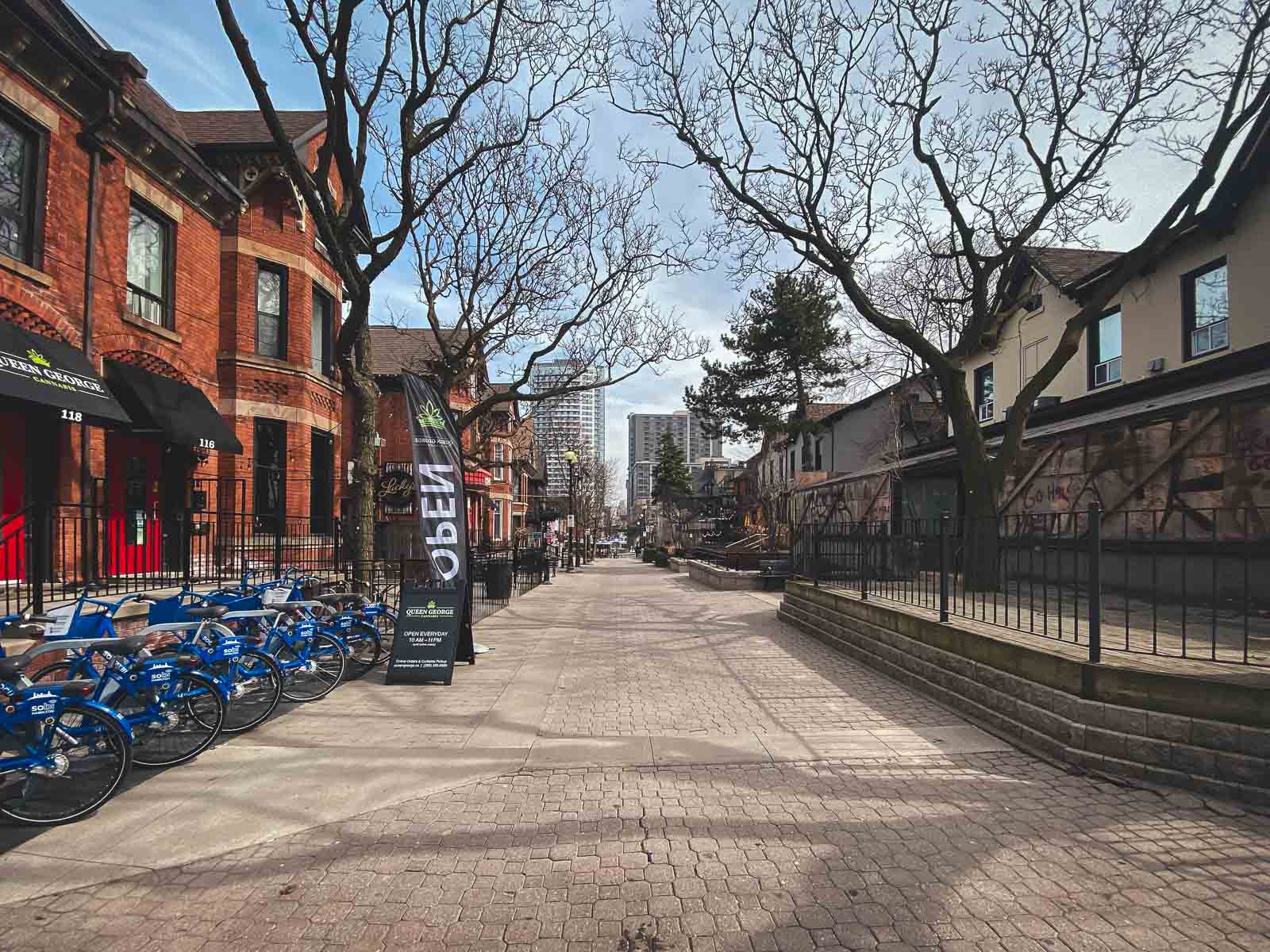
Bayfront Park sits at the northern foot of the city where Hamilton meets its harbour. It’s a straightforward green space - good for picnics, easy walking, and watching the water - but it connects to the Waterfront Trail, which stretches for kilometres along Hamilton Harbour and can be done on foot or by bike. Rental bikes are available along the trail.
Hutch’s, a decades-old fish and chips spot right on the waterfront near the trail, remains the most reliable quick meal in this part of the city. It’s a counter-service operation, outdoor seating, nothing fancy - and consistently worth the stop.
James Street North and the Art Crawl
James Street Art Crawl runs on the second Friday of each month. Galleries, studios, and shops along James Street North stay open late, street food vendors set up, and the neighbourhood runs at a different frequency than a standard weekday. It’s not a curated art-fair experience - it’s looser and more neighbourhood-scale than that, which is part of why it draws a consistent crowd rather than burning out.
The Art Gallery of Hamilton downtown holds a strong permanent collection of Canadian art. It’s free on certain days and rarely overcrowded, which makes it easy to give real time to the work rather than shuffling through.
Born & Raised on James Street North has become the dinner reference point after an Art Crawl evening. The kitchen focuses on Canadian ingredients prepared without fuss, and the room itself reflects the building’s industrial past without leaning into the aesthetic as a design concept.
Eating Beyond the Obvious
King William Street and Locke Street
King William Street runs east of James and has accumulated a dense stretch of independent restaurants in a short distance - Japanese, Lebanese, Italian, all within a few blocks. It’s worth walking the full stretch before committing to a table.
Locke Street sits further west and has a slower, residential pace. The restaurants here tend toward neighbourhood regulars rather than destination dining, which suits a late Sunday lunch better than a Friday night out. Both streets are worth knowing depending on what kind of evening you want.
Hamilton Farmers’ Market
The Hamilton Farmers’ Market operates out of the century-old farmers’ market building downtown. It runs Thursday through Saturday and covers the full range from produce to prepared food to local cheese. Saturday morning is the peak time, and the building gets crowded - but that’s also when the selection is fullest.
Practical Notes for Planning Your Visit
Hamilton is manageable without a car if you’re staying downtown and focused on James Street North, the waterfront, and the market. The waterfall trails and Spencer Gorge require a car or a planned rideshare - public transit doesn’t reach them reliably.
The best months to visit fall between May and October. The waterfalls run strongest in spring following snowmelt, and some, like Albion Falls, can reduce to a trickle by late summer. The Art Crawl runs year-round regardless of season.
Parking downtown is generally inexpensive compared to Toronto - street parking on evenings and weekends is free in parts of the core. If you’re coming from Toronto, the GO Train runs to Hamilton’s West Harbour station, putting you within walking distance of the waterfront and James Street North.
A timed entry reservation for Spencer Gorge Conservation Area costs around $7 per vehicle during peak season. That’s the price of access to two of the best waterfalls in Southern Ontario within the same half-morning.