The Cheese Cube Era Is Over
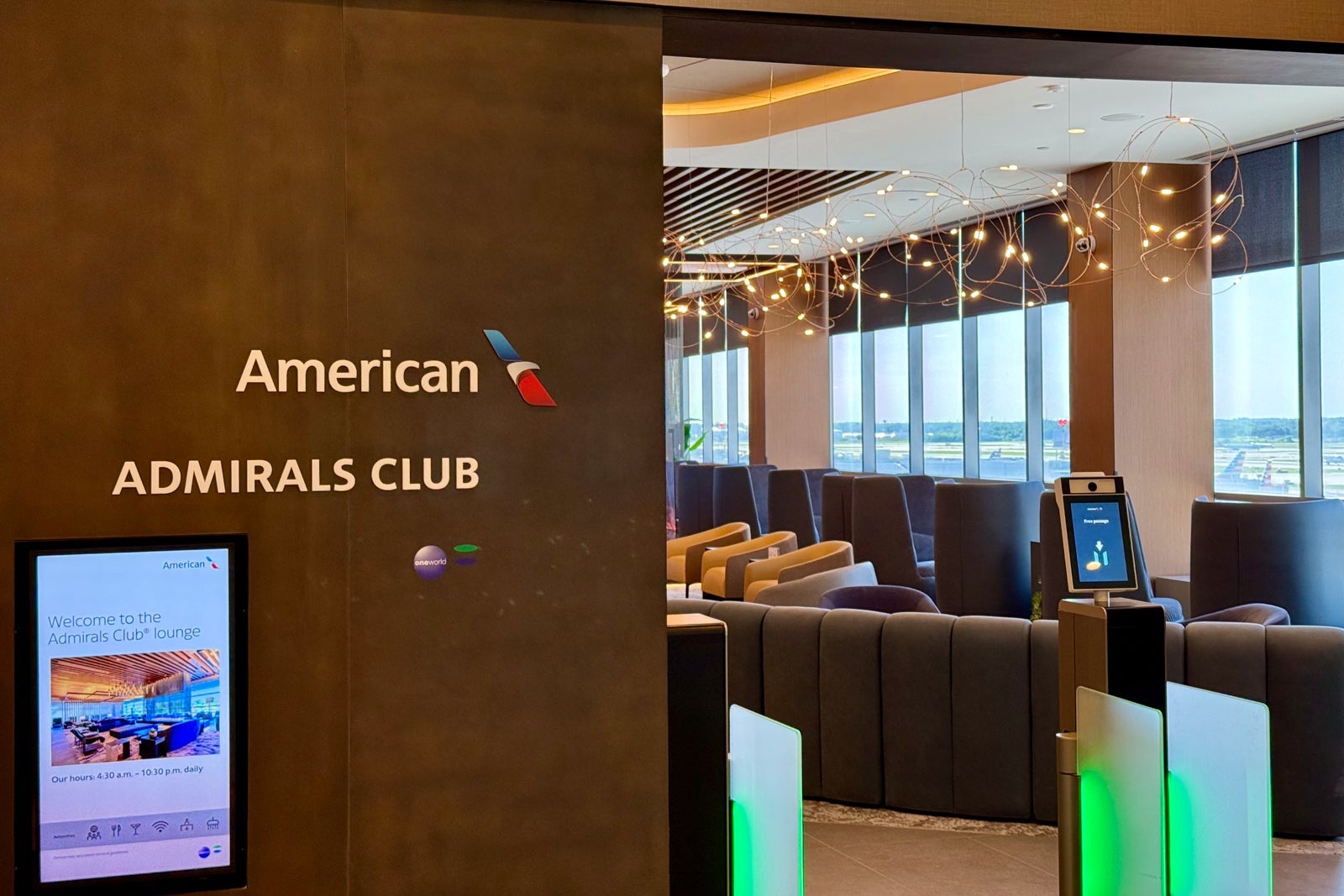
For years, the Admirals Club occupied a particular place in the airport hierarchy: better than the gate, worse than a meal. You could get coffee, something wrapped in plastic, and on a good day, a few cubes of cheddar on a tray. That was largely the deal. American Airlines knew it, frequent flyers knew it, and Delta’s Sky Club cafeteria-style spreads made the contrast impossible to ignore every time someone posted a lounge comparison online.
That calculus is shifting. American has now rolled out upgraded food and beverage offerings across its Admirals Club network — changes already in place at clubs systemwide — and the airline is framing it not as a minor refresh but as a deliberate step toward what travelers now expect from a lounge in 2025.
What’s Actually Different at Admirals Clubs
The most immediate change is the addition of two new hot food items at Admirals Clubs, giving travelers the components to assemble something closer to an actual meal rather than a collection of snacks. The charcuterie station has been upgraded, and the menu will rotate more frequently — meaning repeat travelers passing through the same hub on back-to-back weeks won’t necessarily encounter the identical spread each time.
That rotation matters more than it might sound. Lounge regulars — road warriors on weekly routes through Charlotte, Chicago O’Hare, or Dallas — have long complained that Admirals Club food is not only sparse but static. A more dynamic menu acknowledges that the lounge’s most loyal users are exactly the people most likely to notice when nothing has changed for three months.
American’s chief customer officer, Heather Garboden, put the shift in plain terms at an industry conference in December. “If you look at a decade ago, a lounge is where you went to have a cup of coffee and a snack,” she said. “I think now you go into a lounge, the expectation is that you can order an a la carte menu.” That’s a frank admission that the product had fallen behind — and a reasonably clear signal of where the airline believes it needs to land.
On the drinks side, American is introducing premium wine options for purchase at Admirals Clubs: Veuve Clicquot rosé and Caymus Vineyards cabernet sauvignon, a well-regarded Napa Valley label, will be available soon. For context, this is the same airline currently serving boxed wine in economy on long-haul flights. The gap between what’s happening at the back of the plane and what’s coming to the lounge is wide enough to walk through.
Flagship Lounges Get a Restaurant-Adjacent Upgrade
The changes reaching American’s higher-tier Flagship Lounges are structurally different. Rather than improving a buffet, American has deployed a scan-to-order system across all Flagship Lounge locations — guests scan a QR code and order from a menu, the way they would at a sit-down restaurant, rather than circling a self-serve spread.
American first tested this format last year at its Flagship Lounge at Philadelphia International Airport (PHL), and the rollout now covers the full network. It’s a meaningful distinction for travelers who access these clubs — primarily business-class passengers and high-tier AAdvantage elite members departing on long-haul flights.
It stops short of what Delta has built at its Delta One Lounges, which operate closer to full-service restaurants with dedicated staffing. American’s QR-code model is a step removed from that. But for travelers accustomed to Flagship Lounge dining as it existed before, it’s a functional improvement in both ordering experience and presentation.
Flagship Lounges will also gain dedicated cheese monger stations in the near future.
The Delta Pressure Is Real
American did not build these changes in a vacuum. Delta’s Sky Club network has, for several years, offered meaningfully better food than the Admirals Club — heartier hot options, more variety, and a presentation that made the Sky Club feel like a destination rather than a waiting room. That comparison has followed American into every lounge conversation, and the airline has acknowledged it directly.
American’s Admirals Club network did receive recognition this year in a lounge analysis as offering the best value-for-cost of any U.S. airline lounge portfolio — a meaningful distinction, given that credit card partnerships and membership fees make lounge access a real financial consideration for many travelers. But “best value” and “best food” are not the same sentence, and American has been candid that the culinary side required attention.
The competitive pressure doesn’t come only from other airlines. Credit card issuers operating their own lounge networks — Capital One, Amex with its Centurion Lounges — have raised the bar on what pre-flight hospitality looks like, and travelers with access to multiple lounge types have developed opinions accordingly. American’s food upgrade is partly a response to that wider landscape.
New Clubs Coming, Not Just Better Food
The food changes sit alongside a separate, longer wave of physical expansion. In the past year, American has announced new Admirals Clubs for Charlotte, Austin, Nashville, Chicago, and Washington, D.C. A new Flagship Lounge is also planned for its hub in North Carolina.
Entering 2026, the airline had already committed to a “steady stream” of lounge announcements — language that suggested the expansion wasn’t a one-time push but an ongoing infrastructure priority. Physical growth and food quality aren’t the same investment, but together they indicate an airline that has decided its lounge product deserves sustained attention rather than periodic tinkering.
For travelers who spend meaningful time in American’s clubs — whether through AAdvantage elite status, Admirals Club membership, or credit card access — the practical question is how quickly these changes become consistent across locations. A systemwide rollout announcement is one thing; finding the upgraded spread actually in place at a midsize hub on a Tuesday morning is another.
Flagship Lounge access, for reference, is restricted to business-class passengers and qualifying AAdvantage elite members on eligible long-haul departures — not every traveler with Admirals Club access will encounter the QR-order menus. That distinction is worth knowing before you book with a layover in mind.
The Veuve Clicquot rosé, when it arrives at Admirals Clubs, will be available for purchase rather than complimentary — so the upgrade carries a price tag, even if the exact figure hasn’t been announced.