Destinations
The airport used to be the part of travel you endured. That calculation has shifted - not everywhere, and not for everyone - but for holders of the American Express Platinum Card or the Business Platinum Card from American Express, the terminal itself has become a place worth arriving early for.
More Than One Door
Most cardmembers know about Centurion Lounges. Fewer realize that Centurion access is only one layer of a much larger network called the American Express Global Lounge Collection - a program that spans more than 1,550 airport lounges across 140 countries. The difference matters enormously depending on where you’re flying from, because Centurion Lounges exist in only 16 U.S. airports. The Global Lounge Collection fills in the rest of the map.
Both the personal Amex Platinum and the Business Platinum open the same set of doors. Cardmembers - including authorized users who hold additional Platinum cards, though not those with companion Platinum cards - gain entry to most participating lounges by presenting their card, a government-issued ID, and a valid boarding pass. Guest policies and access rules vary by lounge network, which makes knowing the distinctions practical rather than academic.
Delta Sky Club access is included for both cards, restricted to same-day Delta-operated flights and capped at 10 annual visits unless a specified spending threshold is met. Basic economy fares are excluded. Priority Pass Select membership also comes with both cards, requiring enrollment. Beyond those two networks, the collection includes Aspire Lounges, Escape Lounges, Plaza Premium lounges, select Lufthansa lounges (access discontinued as of October 1), and additional Global Lounge Collection partner properties. The Global Lounge Collection website lets cardmembers search participating lounges by airport before departure.
What this means in practice: a cardholder routing through a mid-size airport with no Centurion presence often still has a lounge option via Priority Pass or one of the partner networks. The geography of the collection, imperfect as it is, covers far more ground than the flagship Centurion brand alone.
Inside the Centurion Network
The 16 open Centurion Lounges in the United States anchor the collection. They currently operate at Hartsfield-Jackson Atlanta (ATL), Charlotte Douglas (CLT), Dallas Fort Worth (DFW), Denver (DEN), George Bush Intercontinental in Houston (IAH), Harry Reid International in Las Vegas (LAS), Los Angeles (LAX), Miami (MIA), JFK and LaGuardia in New York City, Philadelphia (PHL), Phoenix Sky Harbor (PHX), Salt Lake City (SLC), San Francisco (SFO - under renovation until 2027, with a temporary lounge running in Terminal 2), Seattle-Tacoma (SEA), and Ronald Reagan Washington (DCA). Two more are coming: Newark Liberty (EWR) is expected to open this year, and Boston Logan (BOS) is slated for 2029.
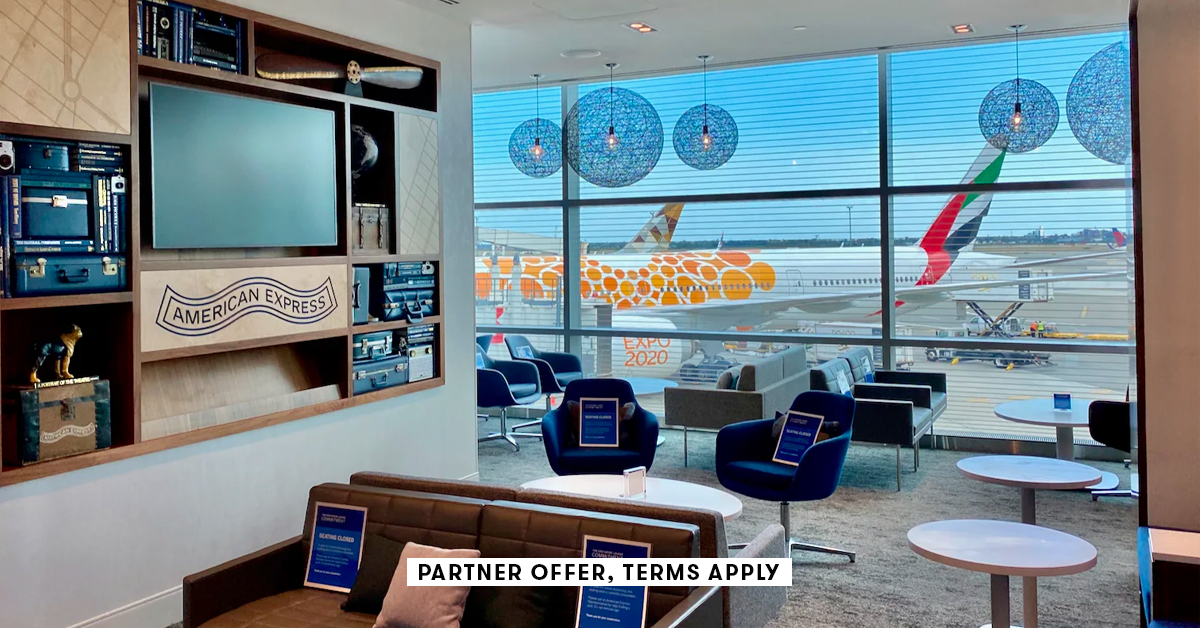
Each Centurion Lounge runs a staffed bar, full meals, nonalcoholic drinks, high-speed Wi-Fi, and varied seating configurations. Some locations include family rooms. These are not gap-fillers - they’re purpose-built spaces designed to hold you for a few hours without you noticing the time.
Las Vegas introduced something new this year: a concept called Sidecar by Centurion Lounge. It’s a faster, more intimate dining format aimed at travelers with a flight departing within 90 minutes - a direct response to the frustration of arriving at a full-service lounge without enough runway to use it properly. American Express has indicated plans to expand the Sidecar concept to at least one additional location.
San Francisco’s renovation situation is worth flagging for frequent West Coast travelers. The SFO Centurion Lounge is under construction until 2027, and the temporary Terminal 2 setup is not a like-for-like replacement. Anyone building a long SFO layover around the lounge experience should verify current conditions before the trip.
The Centurion network’s footprint, for all its quality, remains thin relative to the Global Lounge Collection as a whole. Sixteen U.S. locations across a country with hundreds of commercial airports means the flagship product is geographically concentrated - disproportionately weighted toward major hubs and high-traffic leisure markets. Salt Lake City and Las Vegas make the cut; Nashville and Austin do not. That gap is why the broader collection exists.
Reading the Fine Print Before You Fly
Access rules across the Global Lounge Collection are not uniform, and the differences surface in ways that catch travelers off guard. Delta Sky Club’s 10-visit annual cap is the most consequential - for frequent fliers who use Delta as a primary carrier, that ceiling arrives faster than expected, especially on shorter trips where a lounge stop feels almost automatic. Crossing the cap requires meeting a spending requirement on the card to restore unlimited access, which shifts the calculus from a travel benefit into a spending incentive.
Priority Pass Select, by contrast, operates with different rules at different properties. Some Priority Pass lounges charge for guests. Others cap the number of guests per visit. A few have moved to restaurant credits in lieu of lounge access, which works well in some airports and poorly in others. Enrollment is required to activate Priority Pass through American Express - it does not auto-enroll at card opening.
The Lufthansa lounge access that previously appeared in the collection’s partner list has been removed as of October 1. For cardmembers who routed European connections through Frankfurt or Munich specifically to use that benefit, the collection now looks different in those terminals.
What remains consistent across the Centurion properties specifically is the quality floor. A staffed bar and a hot meal are guaranteed features, not aspirational ones. For a traveler spending a significant portion of the year in airports, that baseline matters more than any single premium amenity.
The annual fee for the personal Amex Platinum is $695. The Business Platinum carries an annual fee of $695 as well. Lounge access is one component of a broader package - both cards stack hotel status benefits, travel statement credits, and other perks on top of the lounge network - but it’s the benefit that reshapes the physical experience of transit most directly.
Whether the lounge network alone justifies either card’s fee depends entirely on how often you fly and from where. For a traveler based in Atlanta, Dallas, or New York, with Delta or a Priority Pass property at their home airport, the math is different than for someone flying primarily out of a mid-size regional hub. The Global Lounge Collection website is the honest place to start: search your most frequent departure airports, count the options, and see what’s actually behind those doors.