The Cheese Cube Era Is Over
For years, the Admirals Club ran on a reliable, unremarkable formula: boxed snacks, a coffee station, maybe something warm if you were lucky and the timing was right. Frequent flyers learned to eat before arriving or pack their expectations accordingly. That calculus has shifted.
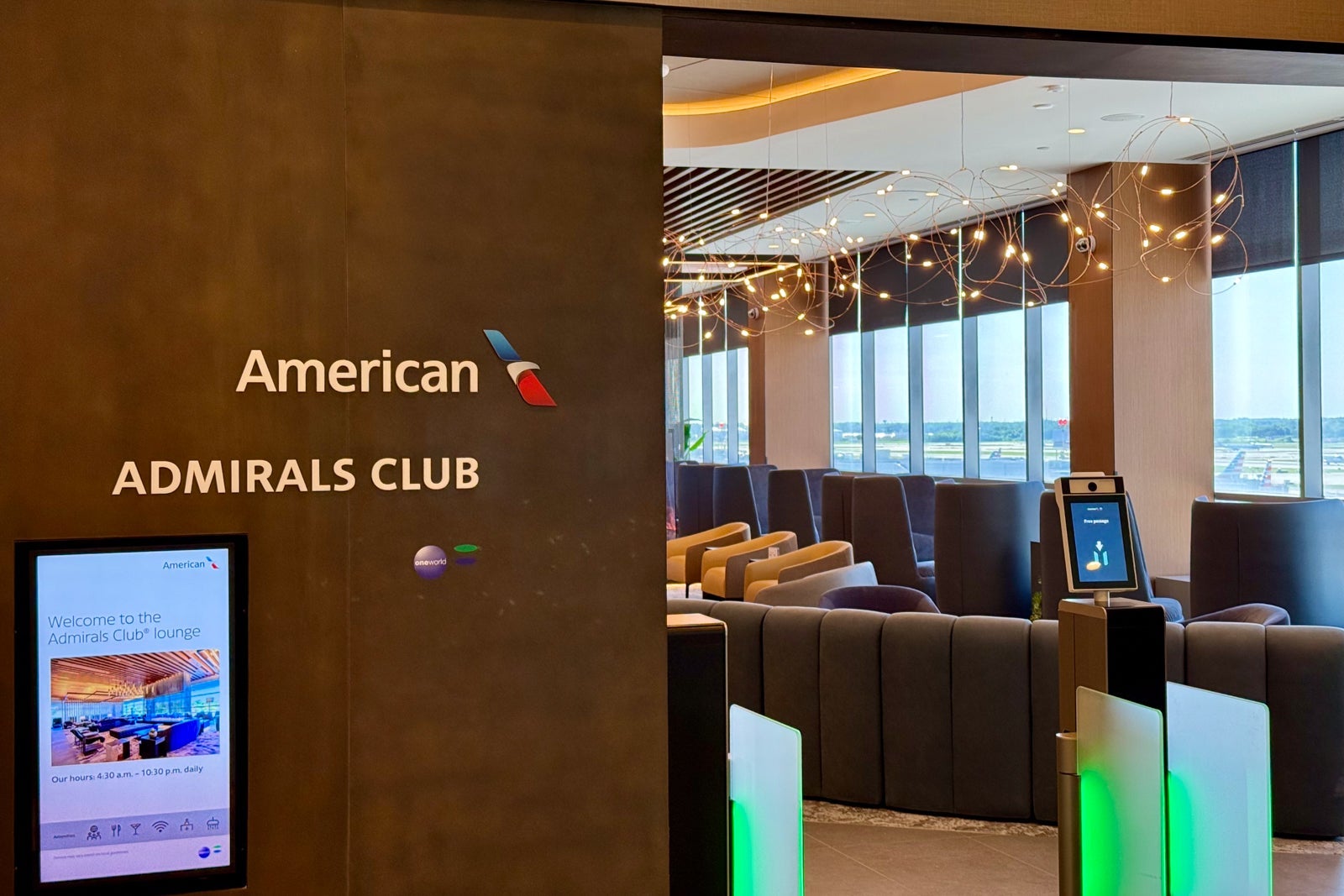
American Airlines has rolled out a new food and beverage program across its Admirals Club network, and the changes are already in place. The airline is describing the updates as “more complete meal offerings” with “noticeably elevated presentation” - corporate language, but the substance behind it is real.
The gap it’s closing is a competitive one.
What’s Actually Different at Admirals Clubs Now
Delta’s Sky Clubs have, for a long time, offered more substantial food than American’s comparable lounges. That difference has not gone unnoticed by travelers who hold lounge access across multiple programs. American’s chief customer officer, Heather Garboden, acknowledged the shift in expectations at an industry conference in December: “If you look at a decade ago, a lounge is where you went to have a cup of coffee and a snack. So it definitely has changed.” She continued: “I think now you go into a lounge, the expectation is that you can order an a la carte menu.”
What American has added in response: two additional hot food items at Admirals Clubs, giving members enough to construct an actual meal rather than graze between flights. The charcuterie station has been described as “upgraded,” and menu items will now rotate more regularly - a detail that matters more than it sounds for travelers who use the same club multiple times a week and had long since memorized every option.
On the beverage side, the upgrades are harder to ignore. Veuve Clicquot rosé and Caymus Vineyards cabernet sauvignon - a well-known Napa Valley label - are coming to Admirals Clubs for purchase. The contrast with the boxed wine currently poured in economy on long-haul flights is sharp enough that it’s worth noting plainly.
Flagship Lounges Get a Different Upgrade
The changes aren’t limited to the standard Admirals Club tier. American has now completed a broader rollout of scan-to-order menus across all of its Flagship Lounges - the higher-end facilities accessible to business-class passengers and top-tier AAdvantage elite members departing on long-haul routes.
The QR code ordering concept first appeared last year at the Flagship Lounge American opened at Philadelphia International Airport (PHL). Rather than approaching a buffet line, guests scan a code and order as they would at a restaurant table. It doesn’t quite reach what Delta has built at its top-of-the-line Delta One Lounge facilities, where the restaurant experience is more fully realized. Still, the scan-to-order model is a meaningful step away from the serve-yourself buffet setup that has defined most domestic airport lounges for decades.
Flagship Lounges are also set to receive cheese monger stations in the near future, adding another layer of differentiation between the two club tiers in American’s network.
The Longer View on American’s Lounge Strategy
Food and drink upgrades are the visible part of a larger renovation happening across the network. Over the past year, American has announced new Admirals Club locations in Charlotte, Austin, Nashville, Chicago, and Washington, D.C. A new Flagship Lounge is also planned for its North Carolina hub. Entering 2026, the airline had committed to delivering a “steady stream” of lounge announcements - physical expansions that the food upgrades are meant to complement rather than replace.
It’s worth noting that American’s Admirals Club network already carries a specific advantage that has nothing to do with hot food. The network was recognized in TPG’s Best Airlines Report as offering the best value of any U.S. airline lounge portfolio - a meaningful distinction for travelers weighing the cost of access against what they actually get.
The cost question is relevant here. Admirals Club membership, access via qualifying American Airlines credit cards, and day passes each come with different price structures. Eligible American Airlines and Alaska Airlines flights, along with certain credit card partnerships, determine who gets through the door. The food upgrades don’t change access rules, but they change the calculus for whether that access feels worth maintaining.
What This Means If You Fly American Regularly
If your travel pattern puts you in an Admirals Club two or three times a month - say, through a hub like O’Hare, Miami, or Dallas/Fort Worth - the practical effect of these changes is noticeable. Two additional hot food items may sound minor in isolation, but combined with a rotating menu and a better charcuterie spread, the lounge shifts from a holding space into somewhere you might actually plan to eat.
For Flagship Lounge access holders, the shift is more conceptual than caloric. Scan-to-order menus change the social dynamic of the space - you stay seated, the food comes to you, and the experience reads closer to a restaurant than a terminal cafeteria. Whether American’s execution matches that framing consistently across all Flagship locations remains a fair question, since rollouts at scale rarely land uniformly everywhere at once.
The Veuve Clicquot rosé at the bar is, of course, not complimentary. It will be available for purchase, which keeps it in a different category from the included food offerings. But its presence signals something about the direction American is pointing - toward a lounge experience calibrated to travelers who have spent time in international business-class lounges and come back with higher expectations.
Still Behind, but Moving
American is not pretending to have caught Delta overnight. The Delta One Lounge format, with its full-service restaurant model, sits in a category that takes years and significant capital to replicate. American’s updates are incremental - additional hot items, better wine, QR codes - but they’re happening across an entire network simultaneously, which is a logistical undertaking that doesn’t get much attention.
The cheese monger stations coming to Flagship Lounges are a small but telling detail. A cheese monger station isn’t a buffet tray of cubed cheddar. It implies staff, selection, and a certain intentionality about what passengers eat before they board a twelve-hour flight.
Caymus cabernet at the bar. Veuve rosé for those who want it. A QR code where there used to be a line. The baseline at American’s lounges in 2025 is not the same as it was two years ago - and the expansion into Charlotte, Austin, Nashville, Chicago, and Washington is still coming.